
A miter saw is the tool woodworkers and trim carpenters rely on for fast, accurate angled and crosscuts in lumber, molding, and trim, jobs that a circular saw or jig saw simply can’t match for repeatability and precision. With a pivoting arm that swings left and right for miter cuts and tilts for bevel cuts, a miter saw locks in an angle once and delivers the exact same cut every time, whether you’re framing a deck, installing crown molding, or building furniture.
The right miter saw for you depends on the size of material you cut most often, whether you need sliding capacity for wide boards, and whether corded power or cordless freedom matters more for your workflow. Sliding compound miter saws add rail-guided travel that lets the blade cut through much wider stock than a fixed-head saw of the same blade size, while single-bevel and smaller-blade saws stay lighter and more affordable for trim work and jobsite portability. Below we’ve researched five of the best miter saws on Amazon right now, based on the manufacturer’s listed specifications, verified customer ratings, and real buyer feedback, so you can match the right one to your projects and budget.
| Image | Product | Price | Rating | Best For | Check Price |
|---|---|---|---|---|---|
 |
DEWALT DWS780 12-Inch Sliding Miter Saw | $499.00 | 4.8★ (2,474) | Best Overall | Check Price |
 |
BOSCH GCM12SD Glide Sliding Miter Saw | $549.00 | 4.7★ (2,040) | Best Premium | Check Price |
 |
SKIL MS6305 Dual Bevel Sliding Miter Saw | $279.00 | 4.6★ (2,196) | Best Value | Check Price |
 |
CRAFTSMAN CMCS714M1 Cordless Miter Saw | $229.00 | 4.7★ (713) | Best Cordless | Check Price |
 |
Metabo HPT C10FCG2 Compound Miter Saw | $149.00 | 4.6★ (471) | Best Budget | Check Price |
1. DEWALT 12-Inch Double Bevel Sliding Compound Miter Saw (DWS780) – Best Overall Pick
The DEWALT DWS780 runs a powerful 1,100-watt, 15-amp, 3,800 RPM motor built for heavy-duty applications, paired with an XPS LED shadow line technology that projects a shadow for precise cutting alignment without needing a laser. A super-efficient dust collection system captures over 75% of dust generated, tall sliding fences support crown molding up to 7-1/2 inches nested, and the fence design allows cuts up to 2×14 dimensional lumber at 90 degrees, mitering 60 degrees right and 50 degrees left for expanded capacity.
At $499.00, it holds an outstanding 4.8-star rating from 2,474 buyers, the highest rating on this list. Reviewers consistently praise its cut accuracy, dust collection, and overall build quality for demanding trim and framing work. If you want a dependable, full-featured 12-inch sliding miter saw from a trusted brand, this is the pick to start with.
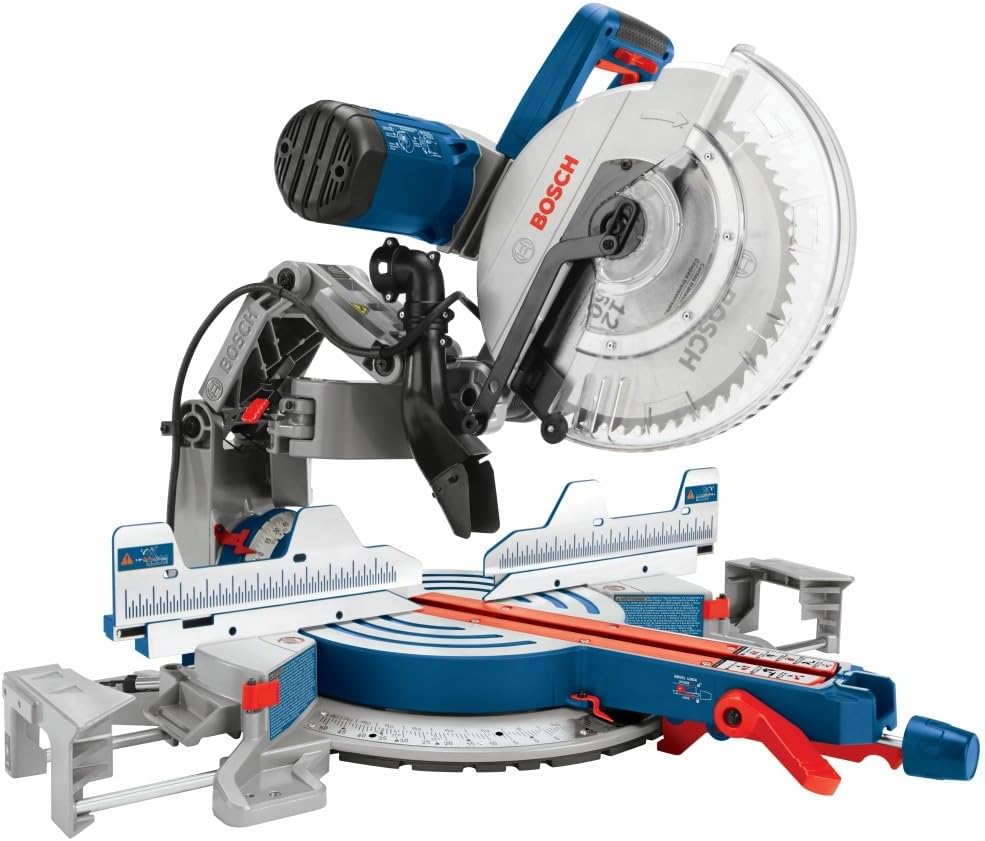
2. BOSCH 12 In. Dual-Bevel Glide Sliding Compound Miter Saw (GCM12SD) – Best Premium Pick
The BOSCH GCM12SD uses Bosch’s exclusive Axial-Glide System for a smooth sliding motion in a space-saving design that doesn’t require rails extending out the back of the saw, ideal for benches placed against a wall. It offers a 52-degree left and 60-degree right miter capacity plus 47-degree bevel capacity in both directions, adjustable miter detents at 0, 15, 22.5, 31.6, and 45 degrees, and a soft-grip ambidextrous handle with a combination dust chute and vacuum adapter for comfort and cleaner cuts.
At $549.00, the most expensive tool on this list, it holds a 4.7-star rating from 2,040 buyers. Reviewers consistently highlight its smooth glide action and space-saving footprint as standout advantages over rail-style sliding saws. If your shop space is tight and you want premium glide performance without sacrificing cutting capacity, this is the pick to reach for.
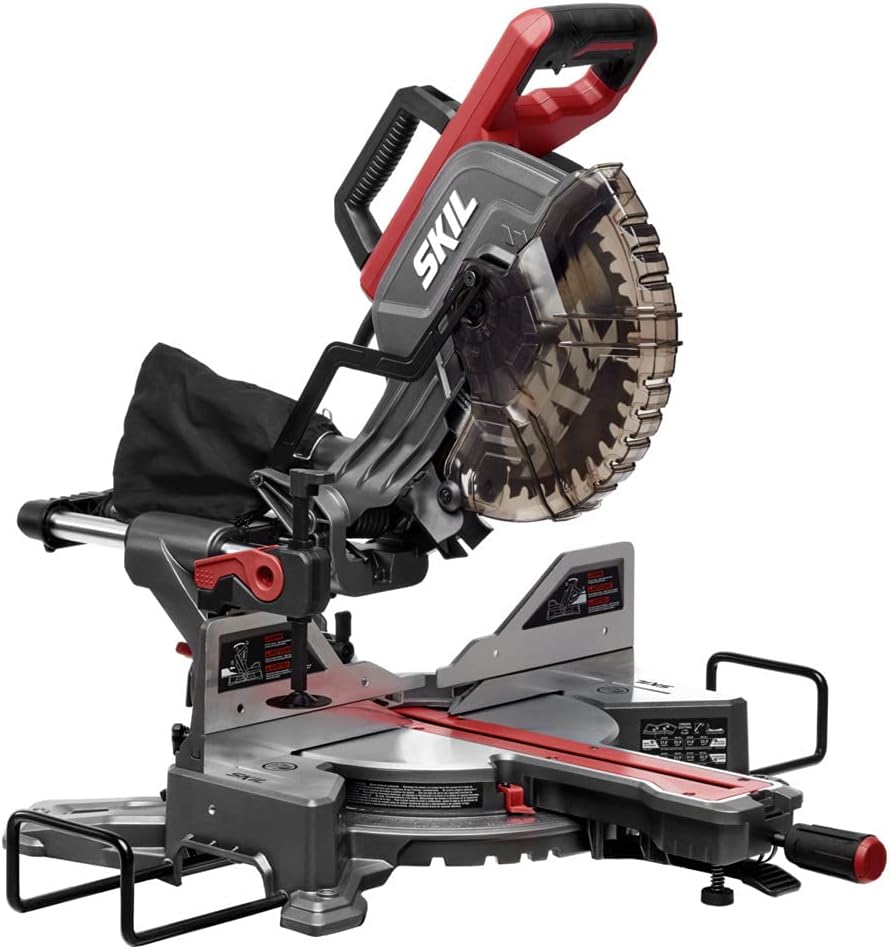
3. SKIL 10″ Dual Bevel Sliding Compound Miter Saw (MS6305-00) – Best Value Pick
The SKIL MS6305 packs a 15-amp motor delivering 4,800 RPM for quick, detailed cuts, along with a dual-bevel design that performs cuts in four positive stop positions at 48 and 45 degrees left, 0 degrees, and 45 degrees right, so you never have to flip the workpiece. An LED shadow line provides high-precision cut alignment, it cross cuts lumber up to 2×12 at 90 degrees, and 11 positive stops cover the most commonly used miter angles up to 50 degrees in either direction.
At $279.00, it holds a 4.6-star rating from 2,196 buyers. Reviewers consistently describe it as an excellent value sliding miter saw with dual-bevel convenience usually reserved for pricier models. If you want true dual-bevel cutting without paying premium prices, this is the value pick to grab.
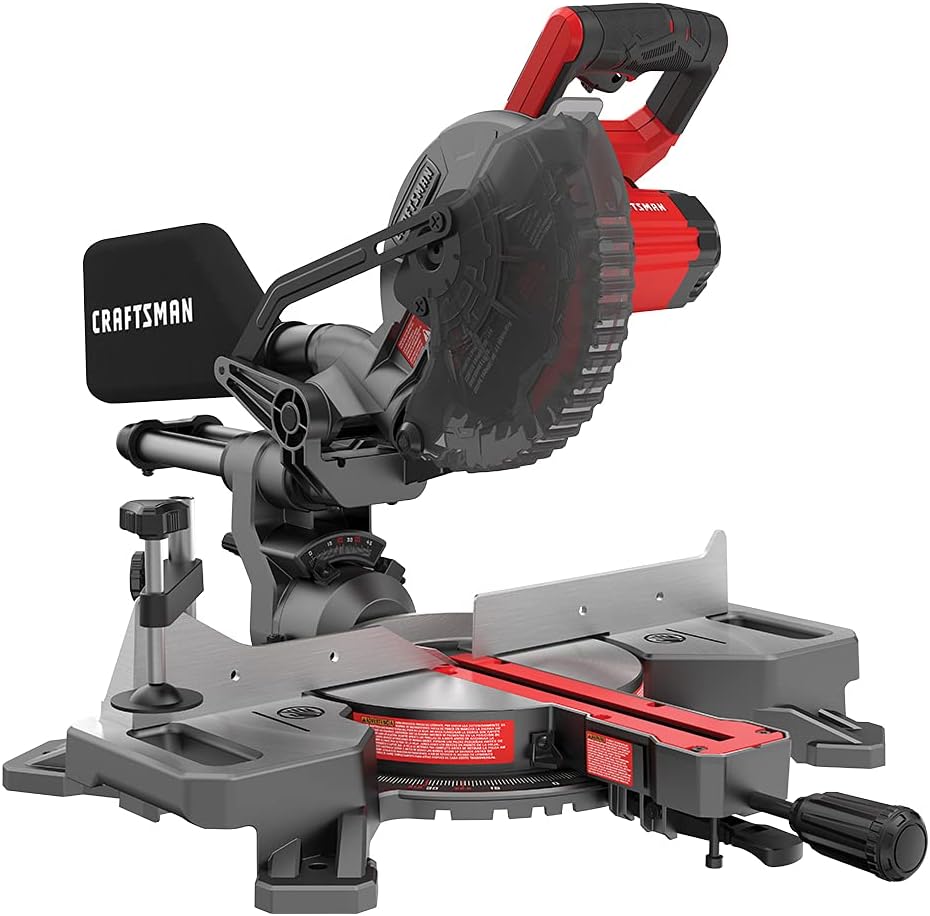
4. CRAFTSMAN V20 Cordless Sliding Miter Saw, 7-1/4 Inch (CMCS714M1) – Best Cordless Pick
The CRAFTSMAN CMCS714M1 runs entirely on a V20 battery, included with the saw along with a charger, delivering a 3,800 RPM motor built for cutting 2x dimensional lumber, hardwoods, baseboard, and trim without a cord getting in the way. It cross cuts 8 inches at 90 degrees and 5-1/2 inches at 45 degrees, slides to cut nested crown up to 3-5/8 inches and baseboard up to 3-1/2 inches vertically, and an LED cut line positioning system keeps cuts accurate. On a single charge it can make up to 585 cuts in 3-1/4-inch MDF baseboard, and side carry handles keep it portable between jobsites.
At $229.00, it holds a 4.7-star rating from 713 buyers. Reviewers consistently praise its cordless convenience and surprising cut capacity for a battery-powered compact saw. If you need to cut trim and lumber away from an outlet, this is the pick to reach for.
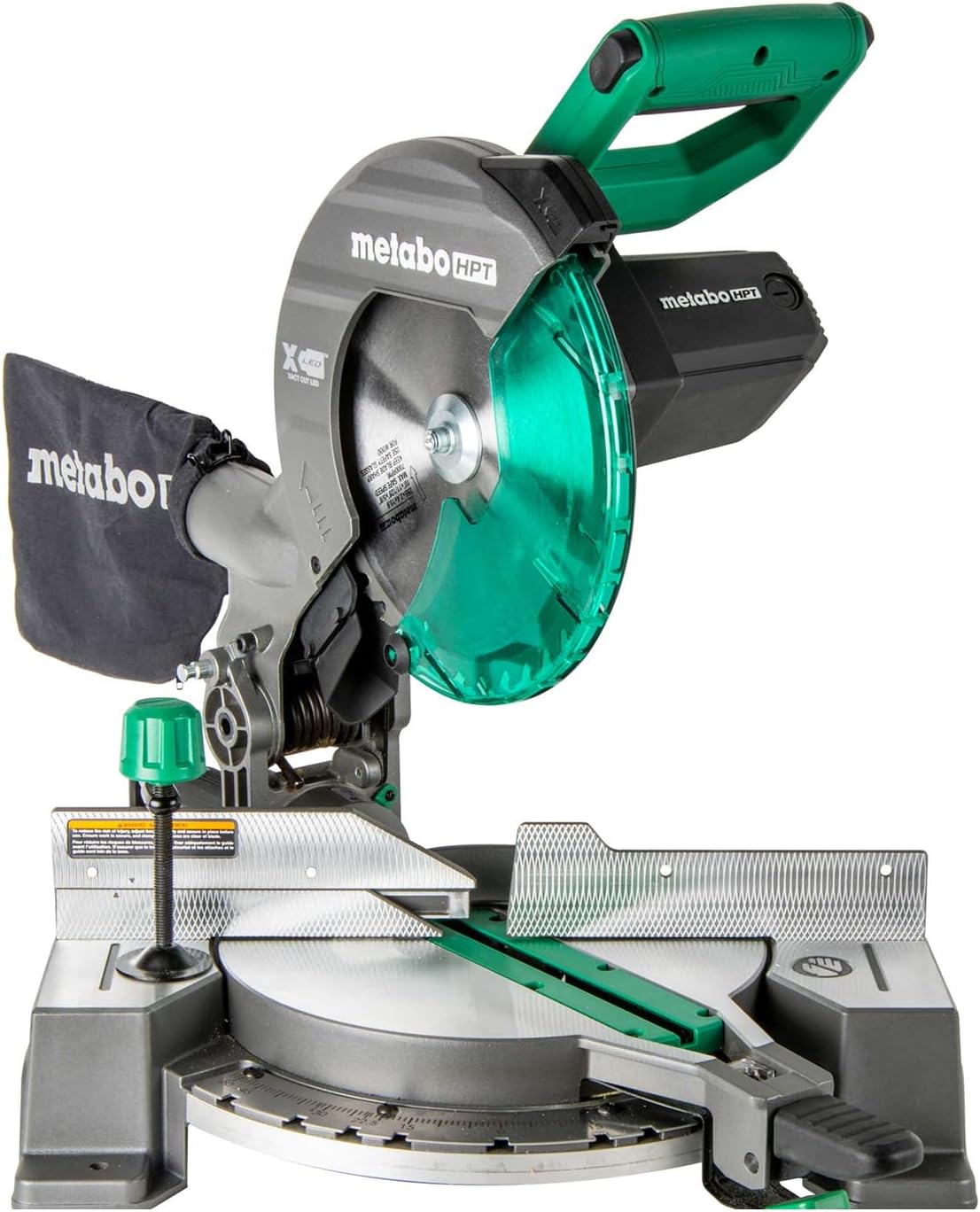
5. Metabo HPT 10-Inch Single Bevel Compound Miter Saw (C10FCG2) – Best Budget Pick
The Metabo HPT C10FCG2 delivers a 15-amp motor generating up to 5,000 RPM for effortless cuts, backed by an improved miter scale and controls for accurate adjustments and a large table for better material support. A vice clamping system secures the workpiece for precision and safety, and at just 24 pounds, it’s the lightest and most portable saw on this list, easy to carry between the shop and the jobsite.
At just $149.00, it’s the most affordable miter saw on this list, and it holds a 4.6-star rating from 471 buyers. Reviewers consistently describe it as a capable, no-frills compound miter saw that handles everyday trim and lumber cutting without the premium price tag. If you want a basic, lightweight miter saw for occasional use around the house or shop, this is the budget pick to grab.
Miter Saws Buying Guide: How to Choose the Right One
Picking the right miter saw comes down to matching blade size, sliding capacity, bevel type, and power source to the cutting work you actually do. Here’s what to weigh before you buy.
Sliding vs. Non-Sliding (Compound) Miter Saws
Sliding miter saws, like the DEWALT DWS780, BOSCH GCM12SD, SKIL MS6305, and CRAFTSMAN CMCS714M1, add rail or glide-guided travel that lets the blade cut through much wider stock, useful for crosscutting wide boards or nested crown molding. Non-sliding compound saws, like the Metabo HPT C10FCG2, are lighter, more compact, and more affordable, but limited to narrower cross cuts, a fine tradeoff for trim work and general household cutting.
Single-Bevel vs. Dual-Bevel
Dual-bevel saws, like the DEWALT DWS780, BOSCH GCM12SD, and SKIL MS6305, tilt the blade in both directions, so you never have to flip the workpiece to cut opposite bevel angles, a real time-saver for crown molding and trim installers. Single-bevel saws, like the Metabo HPT C10FCG2 and CRAFTSMAN CMCS714M1, cost less and stay lighter, requiring you to flip the material for opposite-angle bevel cuts.
Corded Power vs. Cordless Freedom
Corded miter saws, like the DEWALT DWS780, BOSCH GCM12SD, SKIL MS6305, and Metabo HPT C10FCG2, deliver unlimited runtime and typically more raw cutting power for demanding lumber. The CRAFTSMAN CMCS714M1 trades some capacity for true cordless freedom, letting you cut trim and molding anywhere on a jobsite without hunting for an outlet, backed by a battery rated for hundreds of cuts per charge.
Cutting Capacity and Blade Size
Most full-size miter saws use 10 or 12-inch blades; the larger 12-inch blades on the DEWALT DWS780 and BOSCH GCM12SD cut deeper and wider stock in a single pass, useful for framing and dimensional lumber. Smaller blade sizes like the CRAFTSMAN CMCS714M1’s 7-1/4-inch blade keep the saw compact and portable while still handling common trim and baseboard cutting tasks.
Frequently Asked Questions
Do I need a sliding miter saw?
If you regularly cut wide boards, nested crown molding, or wide baseboard, a sliding saw like the DEWALT DWS780 or BOSCH GCM12SD gives you the cutting width a fixed-head saw of the same blade size can’t match. For narrower trim and general cutting, a non-sliding saw like the Metabo HPT C10FCG2 saves money and space.
What’s the advantage of a dual-bevel miter saw?
A dual-bevel saw tilts the blade left or right without flipping the workpiece, which matters most for crown molding and trim installers cutting opposite bevel angles repeatedly. If you mostly cut straight crosscuts and miters without frequent bevel changes, a single-bevel saw like the Metabo HPT C10FCG2 works just as well for less money.
Is the CRAFTSMAN CMCS714M1 powerful enough for regular use?
It’s well-suited for trim, baseboard, and everyday lumber cutting away from an outlet, rated for hundreds of cuts per charge. For heavy daily framing or thicker dimensional lumber, a corded 12-inch saw like the DEWALT DWS780 will handle sustained demanding use better.
What size miter saw blade do I need?
A 10-inch blade, like on the SKIL MS6305 or Metabo HPT C10FCG2, covers most trim and general woodworking needs. Stepping up to a 12-inch blade, like the DEWALT DWS780 or BOSCH GCM12SD, adds cutting depth and width for framing lumber and larger stock.
Conclusion
The right miter saw depends on the size of material you cut and how much sliding capacity and portability you need. For dependable, full-featured performance, the DEWALT DWS780 is a safe choice, while the BOSCH GCM12SD delivers premium glide performance in a space-saving footprint. If value matters most, the SKIL MS6305 brings dual-bevel sliding capability at a lower price, and the CRAFTSMAN CMCS714M1 offers true cordless freedom for jobsite trim work. Step down to the Metabo HPT C10FCG2 if you want a lightweight, budget-friendly saw for occasional use. Whichever you choose, match the blade size, bevel type, and power source to the cutting work you actually do, that’s what determines whether a miter saw becomes a shop essential or one that sits underused in the corner.

Leave a Reply