
A masonry saw is the tool tile setters, masons, and contractors reach for when a project requires clean, precise cuts through tile, brick, concrete, stone, and other hard materials that a standard wood-cutting saw can’t handle. Using a diamond-tipped blade, sometimes cooled with water to control dust and heat, a masonry saw delivers accurate straight cuts, miters, and bevels through materials that would quickly destroy a conventional blade.
The right masonry saw for you depends on the type of material you cut most often, whether you need a stationary tile saw for precision work or a handheld cut-off saw for cutting in place, and how much cutting depth your projects demand. Wet saws control dust and extend blade life through water cooling, while dry-cut saws with dust extraction trade some blade longevity for portability and no water setup. Below we’ve researched five of the best masonry saws on Amazon right now, based on the manufacturer’s listed specifications, verified customer ratings, and real buyer feedback, so you can match the right one to your projects and budget.
| Image | Product | Price | Rating | Best For | Check Price |
|---|---|---|---|---|---|
 |
DEWALT D24000S 10-Inch Wet Tile Saw with Stand | $999.00 | 4.7★ (823) | Best Overall | Check Price |
 |
DEWALT DWC860W Handheld Wet Masonry Saw | $170.99 | 4.3★ (1,274) | Best Handheld | Check Price |
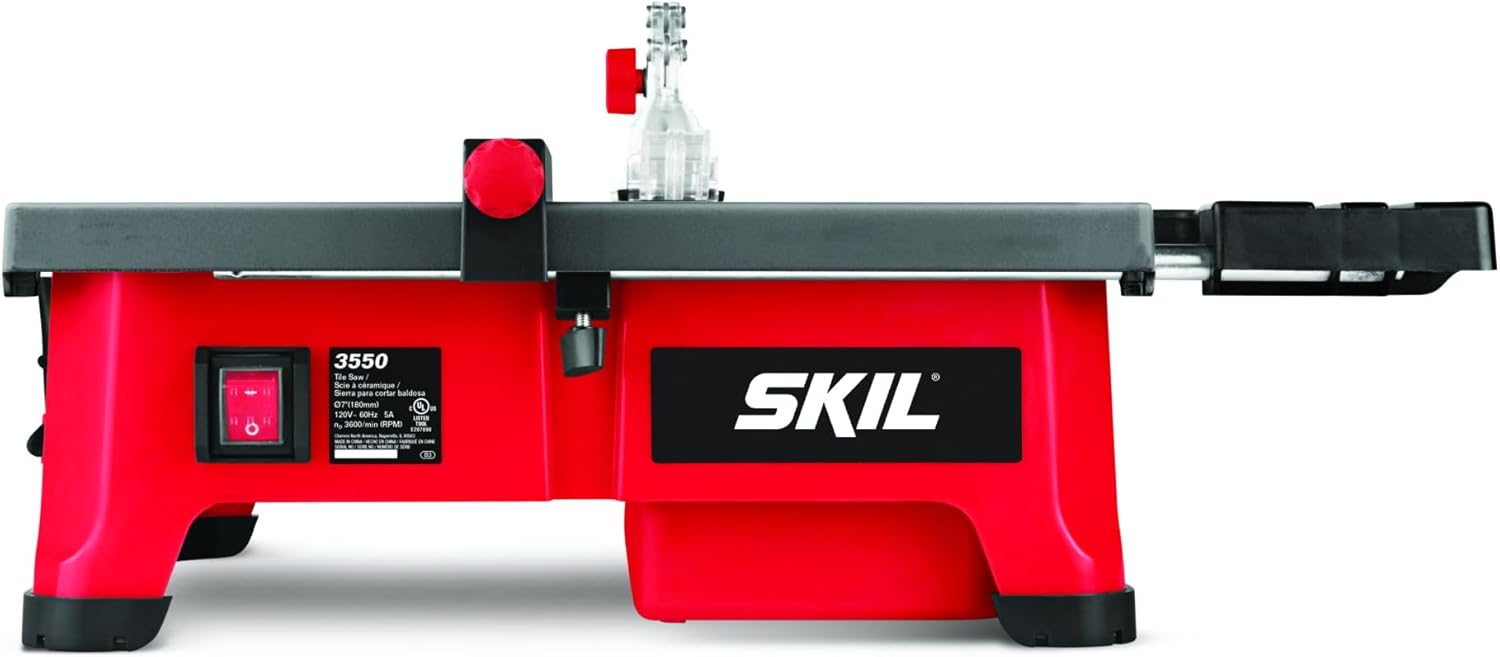 |
Skil 3550-02 7-Inch Wet Tile Saw | $169.00 | 4.4★ (8,350) | Best Value | Check Price |
 |
Makita 4100KB Dry Masonry Saw | $251.72 | 4.6★ (374) | Best Dry-Cut | Check Price |
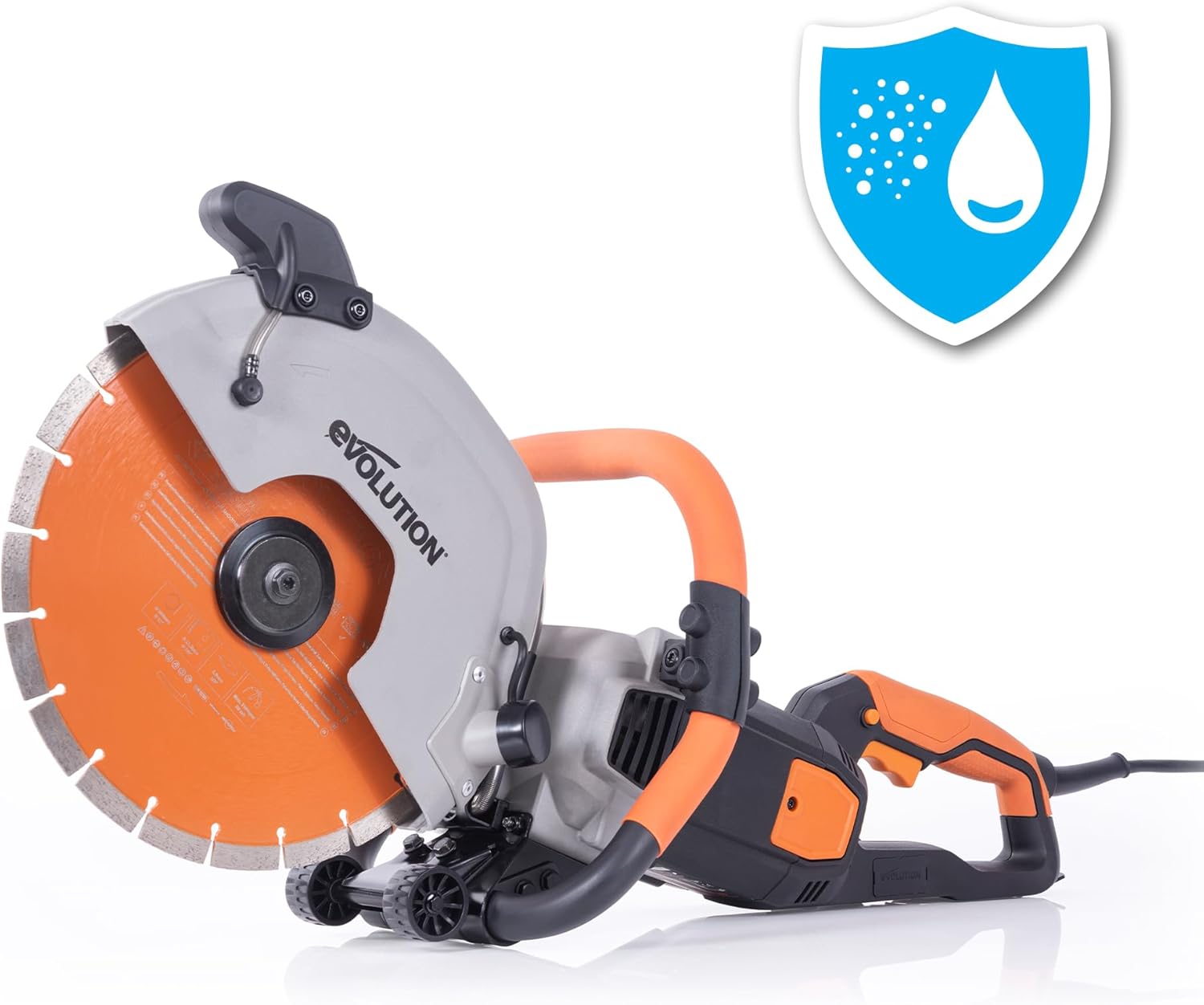 |
Evolution R12DCT Concrete Saw | $240.00 | 4.4★ (598) | Best Deep-Cut | Check Price |
1. DEWALT Wet Tile Saw with Stand, 10-Inch (D24000S) – Best Overall Pick
The DEWALT D24000S comes as a complete package including the saw, stand, a 10-inch XP4 porcelain tile blade, submersible pump, water pan, side and rear water trays, cutting cart side extension, angle and rip guide, and both blade and hex wrenches. A cutline indicator and stainless steel rollers provide stable, accurate cutting to within 1/32 inch over 18-inch cuts, the saw handles an 18×18-inch diagonal cut capacity with a max depth cut of 3-1/8 inches, and the compact saw frame allows for easy transport and storage.
At $999.00, the most expensive tool on this list by a wide margin, it holds a 4.7-star rating from 823 buyers. Reviewers consistently praise its cut accuracy and complete stand setup for professional tile work. If you’re a tile professional who needs precision and capacity in a single complete package, this is the pick to start with.
2. DEWALT Wet Tile Saw, Masonry, 4-3/8-Inch (DWC860W) – Best Handheld Pick
The DEWALT DWC860W packs a powerful 10.8-amp (1,300-watt) motor into a lightweight, 6.6-pound handheld body, delivering the cutting power to cut through granite, porcelain, concrete, and other stone materials wet or dry up to 1-3/8 inches deep. A 13,000 RPM max no-load speed handles demanding applications, it bevels to 45 degrees for angle cuts, a 12-foot water line feeds the blade to reduce dust and extend blade life, and a lock-on button reduces fatigue during production cutting.
At $170.99, it holds a 4.3-star rating from 1,274 buyers, the largest review base on this list. Reviewers consistently describe it as a versatile, portable cutter for on-site masonry work that a stationary saw can’t easily replicate. If you need to bring the saw to the material rather than the other way around, this is the pick to reach for.
3. Skil 7-Inch Wet Tile Saw with HydroLock Water Containment System (3550-02) – Best Value Pick
The Skil 3550-02 uses a HydroLock water containment system that keeps water contained near the blade and reduces clean-up time, paired with a sliding side extension that provides support for tiles up to 18×18 inches. An aluminum tabletop offers a durable, rust-resistant cutting surface, an adjustable rip fence with miter gauge delivers accurate straight and miter cuts, and it bevels tile at 0, 22.5, and 45 degrees for cutting flexibility.
At $169.00, it’s the most affordable saw on this list, and it holds a 4.4-star rating from 8,350 buyers, by far the largest review base here. Reviewers consistently describe it as a dependable, well-contained wet tile saw that delivers strong value for DIY and occasional professional use. If you want a full-featured stationary tile saw without a premium price tag, this is the value pick to grab.
4. Makita 4100KB 5″ Dry Masonry Saw with Dust Extraction – Best Dry-Cut Pick
The Makita 4100KB runs a powerful 13-amp motor delivering 12,200 RPM for demanding dry-cutting applications, with a transparent upper guard dust cover for increased cutting visibility. A high depth-of-cut capacity reaches up to 1-9/16 inches at 90 degrees, the saw attaches to an optional guide rail with adapter for straight, accurate cutting, and a 1-3/8-inch dust extraction port swivels 360 degrees for convenient operation without a water setup.
At $251.72, it holds a 4.6-star rating from 374 buyers. Reviewers consistently praise its dust extraction system and cutting precision for dry-cut masonry work where water isn’t practical. If you need to cut masonry without water, whether indoors or in cold conditions, this is the pick to reach for.
5. Evolution R12DCT 12-Inch Concrete Saw with Water Fed Dust Suppression – Best Deep-Cut Pick
The Evolution R12DCT features dual-sided water delivery for effective dust suppression in accordance with OSHA regulations, powered by a 15-amp electric motor with no pull cords, fuel, or servicing required. It delivers a 4-1/2-inch cut depth with an adjustable blade guard for easy vertical and horizontal cutting, comes with a 12-inch premium diamond blade designed for masonry, brick, roof tile, pavers, stone, concrete, and steel-reinforced concrete, and includes a safety brake that stops the blade in 2 to 10 seconds.
At $240.00, it holds a 4.4-star rating from 598 buyers. Reviewers consistently point to its deep cutting capacity and OSHA-compliant dust suppression as standout advantages for demanding concrete and masonry cutting. If your projects call for deep cuts through thick concrete or reinforced materials, this is the pick to reach for.
Masonry Saws Buying Guide: How to Choose the Right One
Picking the right masonry saw comes down to matching wet vs. dry cutting, portability, and cutting depth to the material and project type you actually work with. Here’s what to weigh before you buy.
Wet vs. Dry Cutting
Wet saws, like the DEWALT D24000S, DEWALT DWC860W, and Skil 3550-02, use water to cool the blade and suppress dust, extending blade life and producing a cleaner cutting environment for tile and stone work. Dry-cut saws, like the Makita 4100KB, rely on dust extraction instead of water, a better fit for cutting indoors, in cold weather, or in situations where water isn’t practical to manage.
Stationary vs. Handheld Saws
Stationary tile saws, like the DEWALT D24000S and Skil 3550-02, offer a table, fence, and miter guide for precise, repeatable cuts on tile and stone brought to the saw. Handheld cut-off saws, like the DEWALT DWC860W and Evolution R12DCT, let you bring the tool directly to the material, essential for cutting installed brick, concrete slabs, or pavers in place.
Cutting Depth and Capacity
Cutting depth determines how thick a material you can cut through in a single pass; the Evolution R12DCT’s 4-1/2-inch depth and the Makita 4100KB’s 1-9/16-inch depth handle thicker masonry and concrete than typical tile saws. Stationary tile saws prioritize diagonal cut capacity instead, with the DEWALT D24000S and Skil 3550-02 both supporting up to 18×18-inch tiles.
Dust and Water Management
Water containment systems, like the Skil 3550-02’s HydroLock system, keep cleanup manageable on wet saws by containing water near the blade. Dust extraction systems, like the Makita 4100KB’s swiveling 1-3/8-inch port, and dual-sided water delivery, like the Evolution R12DCT’s OSHA-compliant system, both address dust for handheld dry and wet cutting respectively.
Frequently Asked Questions
Should I get a wet or dry masonry saw?
Wet saws like the DEWALT D24000S, DEWALT DWC860W, and Skil 3550-02 keep dust down and extend blade life through water cooling, ideal for tile and stone work where water setup is practical. Dry-cut saws like the Makita 4100KB work better indoors or in situations where managing water isn’t feasible.
Do I need a stationary tile saw or a handheld cut-off saw?
If you’re cutting tile or stone pieces before installation, a stationary saw like the DEWALT D24000S or Skil 3550-02 gives you a table, fence, and miter guide for precision. If you need to cut installed brick, concrete, or pavers in place, a handheld saw like the DEWALT DWC860W or Evolution R12DCT is the only practical option.
Is the DEWALT D24000S worth the much higher price?
For occasional home tile projects, the price premium is hard to justify. But for tile professionals doing frequent, demanding work, its complete stand setup, larger capacity, and cutting accuracy reduce downtime and deliver more consistent results over time.
What cutting depth do I need for concrete work?
Standard tile saws handle typical tile and stone thicknesses fine, but for thicker concrete, pavers, or reinforced materials, a saw with greater cutting depth, like the Evolution R12DCT’s 4-1/2 inches, is necessary to cut all the way through in a single or double pass.
Conclusion
The right masonry saw depends on the materials you cut and whether you need stationary precision or handheld portability. For professional tile work with maximum capacity, the DEWALT D24000S is a premium, complete package, while the DEWALT DWC860W offers portable, versatile cutting for on-site masonry work. If value matters most, the Skil 3550-02 delivers a well-equipped stationary saw at an accessible price, and the Makita 4100KB is the pick when dry cutting is required. Step up to the Evolution R12DCT if your projects demand deep cuts through thick concrete or reinforced materials. Whichever you choose, match the wet-or-dry cutting method, portability, and cutting depth to the masonry work you actually do, that’s what determines whether a masonry saw becomes a job-site essential or one that sits underused in the shop.

Leave a Reply